Compare
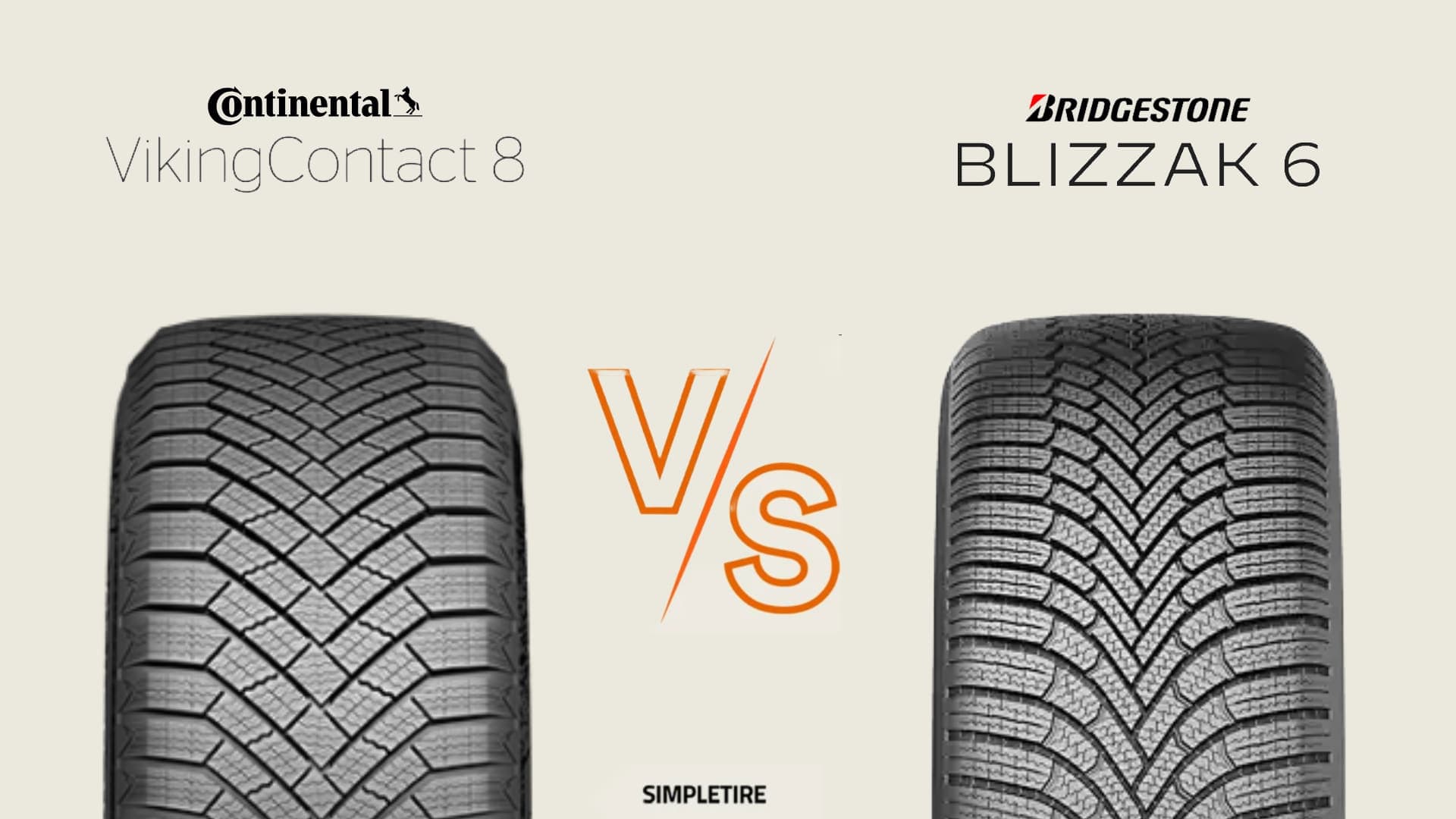
Continental VikingContact 8 vs Bridgestone Blizzak 6 tires
Free shipping
Best price guarantee
SimpleCrew exclusive savings
0% APR Financing
Tire replacement coverage
24/7 roadside assistance
Easy returns
Compare
Choosing the right rubber for freezing temperatures is critical for maintaining safety and performance on unpredictable roads. This comparison examines the Continental VikingContact 8 and the Bridgestone Blizzak 6 to help you navigate harsh winter conditions with total confidence.
The Bridgestone Blizzak 6 and the VikingContact 8 are premium studless winter tires engineered to provide maximum grip when temperatures drop below 45 degrees Fahrenheit. These tires represent the latest in cold-weather technology, with a focus on ice braking, snow traction, and ride comfort.
Offering top-quality tires since the 1870s, Continental is among the world's leading tire manufacturers. It utilizes advanced technologies and new-age features to offer a high-end driving experience. Continental tires are suitable for passenger cars, CUVs, SUVs, and EVs, with a portfolio that includes all-season, winter, and UHP tires.
On the other hand, Bridgestone represents the brilliance of Japanese tire technologies. The tire maker was founded in 1931 and is based in Kyobashi, Japan. Bridgestone’s popular lines include Alenza, Blizzak, and Turanza. Their tires are suitable for passenger cars, light trucks, and EVs, delivering exceptional performance across categories.
While both manufacturers offer exceptional winter tires, the VikingContact 8 vs Blizzak 6 debate is a close one. Both are studless winter tires built for low temperatures, featuring flexible rubber compounds that adapt to varying conditions. To help you make an informed decision, this Continental VikingContact 8 vs. Bridgestone Blizzak 6 analysis compares their traction, handling, and longevity using our proprietary SimpleScore system.

Launched in early 2024, the Continental VikingContact 8 is suitable for passenger cars, electric vehicles, and hybrids. It utilizes advanced features for a confident driving experience in Nordic winter weather. The severe snow rating confirms its ability to perform in extreme cold, while the innovative tread pattern improves flexibility. The tire’s construction promotes quieter rides, and the low-rolling-resistance compound helps control fuel consumption.
Overall, the VikingContact 8 is rated an 8.8 SimpleScore, thanks to its outstanding traction, reliable handling, and extended service life.

The Bridgestone Blizzak 6 was introduced in January 2025 as a next-generation winter solution. This tire offers solid performance on snowy and icy roads, specifically tuned for sedans and sports cars. The Bridgestone Blizzak 6 is designed for a sporty, responsive drive and precision handling. This new-generation tire also utilizes patented ENLITEN technology to ensure the tire wears slowly and evenly over time.
Overall, the Blizzak 6 earns a great 8.6 SimpleScore for its long tread life, reliable handling, and exceptional winter traction.
When maintaining grip on snow and ice, both tires earn outstanding scores. The VikingContact 8 is rated an outstanding 9.3 SimpleScore in traction. It features 3D sipes, snow edges, and three-layer sipes on the shoulders for increased grip in wet and slushy conditions. The rubber compound maintains flexibility in low temperatures, while lateral grooves force water out of the footprint.
On the other hand, the Blizzak 6 scores an impressive 9.4 in traction. Thanks to high-density sipes, the traction performance is remarkably improved. The directional pattern of grooves further helps maintain contact with the surface by evacuating water. The wide, flat contact patch allows a larger area to come into contact with the road for consistent grip. In the VikingContact 8 vs Blizzak 6 traction battle, Bridgestone takes a marginal lead.
ADVANTAGE: Bridgestone Blizzak 6
In handling analysis, the VikingContact 8 scores an 8.8 SimpleScore. This rating assures a controlled ride and sharper steering response on ice. The tread pattern keeps noise levels low, while sipes across the tread improve braking performance on wet surfaces. The wider footprint improves stability, and reinforced shoulders handle cornering pressures for a confident experience.
Contrarily, the Bridgestone Blizzak 6 achieves an 8.4 SimpleScore in handling. This score assures reliable braking and steering response in snowy conditions. While the optimized directional tread pattern ensures a sporty drive, the solid shoulder blocks improve cornering performance. In this category, the Continental tire takes the lead for better overall ride control.
ADVANTAGE: Continental VikingContact 8
Winter tires typically wear faster than all-season tires, making longevity a key factor. The VikingContact 8 is rated at 8.2 SimpleScore in longevity. Its energy-efficient construction slows down the wear rate, and the low rolling resistance compound promotes a longer service life.
The Blizzak 6 scores an 8.0 SimpleScore in longevity. Thanks to ENLITEN technology, the wear rate is controlled. The advanced rubber compound also improves tread life by promoting even wear, while the strong inner construction keeps the tire in shape to prevent premature wear.
ADVANTAGE: Continental VikingContact 8
Both the Continental VikingContact 8 and the Blizzak 6 are studless winter tires optimized for snow and ice. These tires are best for drivers in regions that witness severe snowfall where roads are covered in ice for several months. If you live in an area with only light snow, consider all-weather tires.
Do not use these winter tires when temperatures rise above 45 degrees Fahrenheit, as the soft compounds will wear prematurely in summer environments.
Looking at overall SimpleScores, the VikingContact 8 holds a slight edge over the Bridgestone Blizzak 6 (8.8 vs 8.6). However, the best choice depends on your specific vehicle and driving environment.
Consider the Continental VikingContact 8 if you:
Prefer the Bridgestone Blizzak 6 if you:
SimpleTire is here to help you find the perfect set for your winter commutes. Our experts can assist in selecting the right tire for your ride and budget.
Yes, the Bridgestone Blizzak 6 features a high-density siping pattern and a directional tread design specifically engineered to bite into ice and evacuate slush, earning it a high 9.4 traction score.
Both tires are excellent for electric vehicles. The Continental VikingContact 8 uses a low-rolling-resistance compound to preserve range, while the Blizzak 6 uses ENLITEN technology to handle the heavy torque and weight typical of EVs.
You may also be interested in:
Gripmax MaxGrip X/T vs Arroyo Tamarock R/T tires
MaxGrip X/T and Tamarock R/T are two of the best tire lines on the market, but which one is best for you? Let’s break it down with SimpleScore.
Continental TerrainContact H/T vs Falken Wildpeak H/T02 tires
TerrainContact H/T and Wildpeak H/T02 are two of the best tire lines on the market, but which one is best for you? Let’s break it down with SimpleScore.
Falken Wildpeak A/T4W vs Firestone Destination A/T2 tires
Wildpeak A/T4W and Destination A/T2 are two of the best tire lines on the market, but which one is best for you? Let’s break it down with SimpleScore.
Search By