Compare
Bridgestone UltraWeather vs Goodyear Assurance WeatherReady 2 tires
Free shipping
Best price guarantee
SimpleCrew exclusive savings
0% APR Financing
Tire replacement coverage
24/7 roadside assistance
Easy returns
Compare
All-weather tires offer a perfect hybrid combination of all-season tires with a dash of winter tires for tackling harsh, low-temperature conditions. While working as an all-season tire to deliver year-round performance, their special rubber compound keeps them flexible in temperatures below 45 degrees Fahrenheit.
The fast-evolving world of all-weather tires brings in new contenders over time. And this time, it’s from among the world’s largest tire manufacturers, Bridgestone. The UltraWeather takes winter performance a notch higher than its very own WeatherPeak and other competitors.
On one side we have the Japanese tire giant, and on the other, we have the American tire maker, Goodyear. Its Assurance WeatherReady 2 has been delivering impressive grip, traction, and control in wet and moderate to severe winter conditions. Both tires are severe snow rated, which means they are Three Peak Mountain Snowflake certified for travelling in deep snow and ice. Both tires are backed by solid mileage warranties and deliver longer service life.
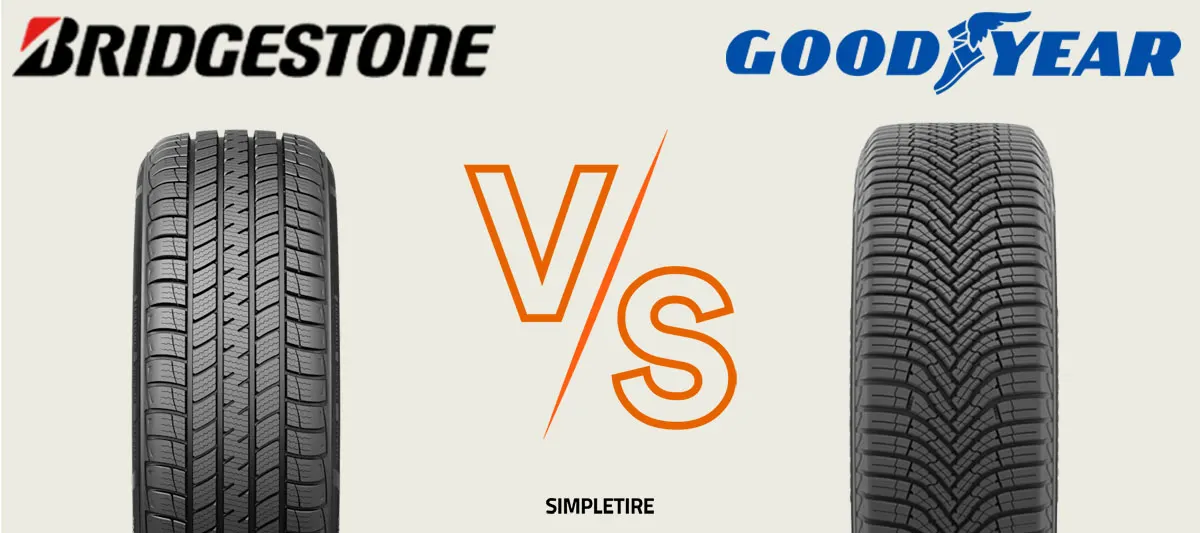
So, which one better aligns with your needs? Let’s do the UltraWeather vs Assurance WeatherReady 2 tires comparison based on their performance in our SimpleScore. It’s our in-house tire rating system that rates each tire on a scale of 0 to 10 for traction, handling, and longevity. Let’s dive in to help you make an informed decision.
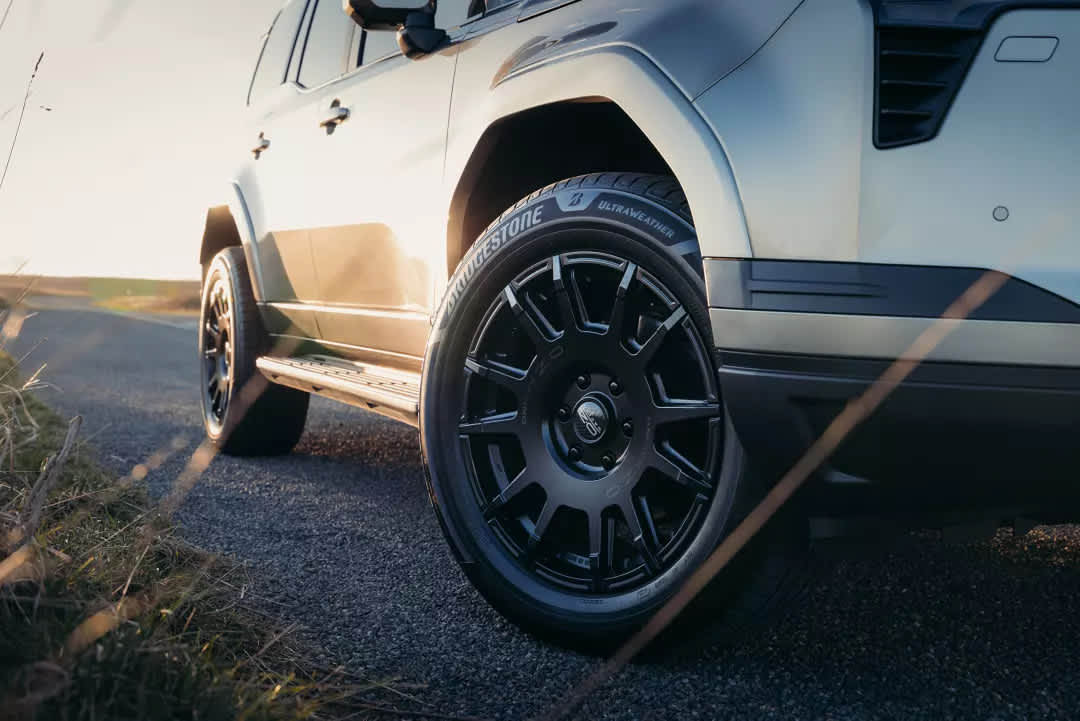
Introduced in June 2026, the Bridgestone UltraWeather is the latest tire on the market, which pushes the boundaries further for an all-weather tire. Designed for passenger cars, CUVs, minivans, and SUVs, the UltraWeather returns reduced stopping distances, exceptional traction, control, and stability, and an impressive service life.
Offering low rolling resistance, the Bridgestone all-weather tire features a special rubber compound, utilizing PeakLife Polymer and soybean oil, to deliver longer tread life. With the company’s ENLITEN technology, the UltraWeather aids in reducing braking distance on rain-soaked and snowy roads. The top-tier tire is offered with a superb 60,000 mile limited manufacturer tread life warranty.
Securing an excellent 9.0 overall SimpleScore, the Bridgestone UltraWeather assures superior grip, traction, handling, stability, and longevity.
Get Bridgestone UltraWeather tires at the best deals for your vehicle here
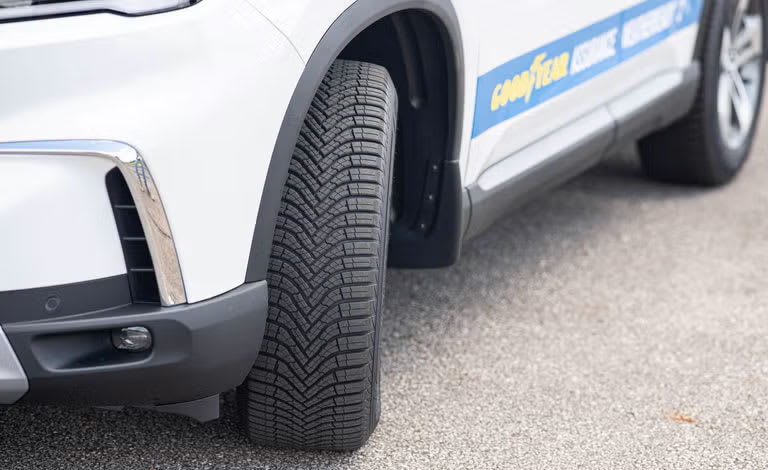
Launched in August 2024, the Goodyear Assurance WeatherReady 2 is another capable all-weather tire that assures incredible performance across the board, be it traction, handling, or longevity. Laced with the Three Peak Mountain Snowflake certificate, the Goodyear tire uses sustainable materials like soybean oil to keep the tread flexible enough to bear sub-freezing temperatures without hardening.
Boosting its wet and snow grip capabilities are Goodyear’s AquaTred system and unidirectional tread pattern that clears water and slush quickly from the tread to mitigate the risk of hydroplaning and improve wet and snow performance. The Goodyear tire is backed by an impressive 60,000 mile limited manufacturer tread life warranty.
Achieving a 9.2 overall SimpleScore, the Goodyear Assurance WeatherReady 2 returns outstanding traction, steering response, stability, durability, and service life.
Get Goodyear Assurance WeatherReady 2 tires at the best deals for your vehicle here
Traction helps a tire grip the surface and hold on to it. It becomes critical if you are driving in wet and snow-clad regions where regular tires are likely to skid. The Bridgestone and Goodyear all-weather tires are spot on in this regard and make you feel safe and secure. But which one is safer between the two? Let’s find out.
Scoring an excellent 9.2 in traction, the Bridgestone UltraWeather returns reassuring grip, braking, and traction around the year. Designed for unpredictable weather conditions, the UltraWeather features open shoulder slots and longitudinal grooves to clear water from the tread and mitigate the risk of hydroplaning and boost wet performance. In their tests, Bridgestone claims that the UltraWeather offers 14% better snow braking than the Goodyear Assurance WeatherReady 2.
On the other hand, the Goodyear Assurance WeatherReady 2 is right there with an excellent 9.2 in traction. With the Three Peak Mountain Snowflake certification, the Goodyear tire assures excellent performance in severe winter conditions. Evolving Traction Grooves, 3D TredLock technology, and sweep-out grooves allow it to efficiently clear slush and water from the tread to deliver reduced braking distance, outstanding wet grip, and confident year-round traction.
Both are exceptional in traction and braking, leaving the traction tussle with a tie.
ADVANTAGE: Tie
While driving on ice, snow, and wet surfaces, you need tires that stick to the surface and offer excellent hydroplaning resistance and impressive steering response and stability. The UltraWeather and Assurance WeatherReady 2 offer incredible handling performance to keep the viewers on their toes. Let’s see if there’s any winner here.
Boasting 9.1 in handling, the Bridgestone UltraWeather assures precise steering response and superb high-speed stability on dry, wet, and moderate to severe snow conditions. Thanks to its open shoulder slots and symmetric tread pattern, the Bridgestone all-weather tire provides superb lane-changing ability and confident control behind the wheel. The strong center rib and multiple sipes put more rubber on the surface while maintaining its integrity for impressive handling performance.
Contrarily, the Goodyear Assurance WeatherReady 2 edges out the Bridgestone with an outstanding 9.2 in handling. The use of Goodyear’s patented 3D TredLock technology allows it to deliver predictable highway control as it locks tread blocks together during cornering to boost stiffness. Additionally, its directional tread pattern and reinforced shoulder blocks provide crisp steering response, lateral stability, and comfortable ride quality.
With a thin margin, the Goodyear Assurance WeatherReady 2 wins the handling round.
ADVANTAGE: Goodyear Assurance WeatherReady 2
All-weather tires offer year-round performance and a longer service life. Both tires provide incredible tread life and strong durability. It’s time to see who has got more endurance and a long-lasting tread life.
The Bridgestone UltraWeather achieves an 8.9 in longevity and promotes uniform wear throughout its lifespan. Backed by Bridgestone’s ENLITEN technology, the UltraWeather curbs chances of premature wear and delivers even wear. Meanwhile, the use of a special rubber compound, PeakLife polymer, helps in maintaining flexibility in sub-zero temperatures and improves its service life. It is backed by a 60,000 mile limited manufacturer tread life warranty.
Boasting a 9.2, the Goodyear Assurance WeatherReady 2 is backed by a solid 60,000 mile limited manufacturer tread life warranty and assures strong durability. It features an advanced soy-based rubber compound, and Evolving Traction Grooves provide new biting edges as it ages. Its optimized tread design means even pressure distribution for long-term performance without sacrificing tread wear.
Another close competition, it’s the Goodyear Assurance WeatherReady 2 that bags the tread life battle as well and, with this, wins the comparison 2-0.
ADVANTAGE: Goodyear Assurance WeatherReady 2
All-weather tires are designed to tackle unpredictable weather conditions where the climate switches from warm to rain and snow. The Bridgestone UltraWeather and Goodyear Assurance WeatherReady 2 offer superior all-round performance. Drivers wanting an exceptional all-weather tire for their year-round use with excellent traction, handling, and tread life should opt for the Goodyear Assurance WeatherReady 2. However, those who want to lay their hands on the latest tire with a more sophisticatedly designed tread pattern should go for the Bridgestone UltraWeather.
Please note that these are not winter tires, so if the weather in your region consistently remains below 45 degrees Fahrenheit, then you should go for a set of dedicated winter tires.
In terms of tire sizes, the Bridgestone UltraWeather and Goodyear Assurance WeatherReady 2 are available in 16- to 22-inch.
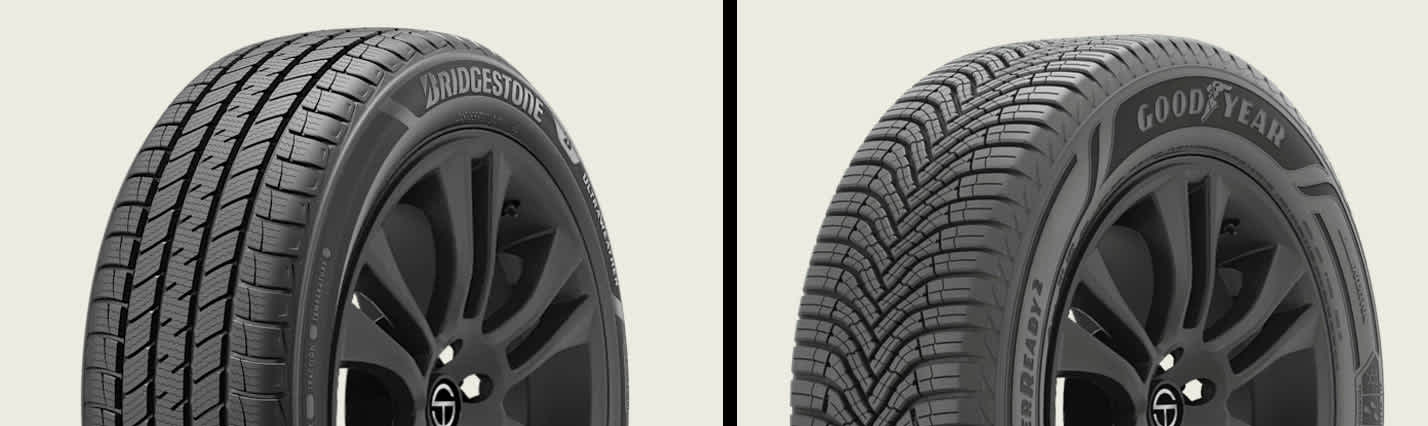
To sum it up, the Goodyear Assurance WeatherReady 2 turns out to be an overall better tire (9.2 vs 9.0) than the Bridgestone UltraWeather. However, you should pick a tire that better aligns with your needs, driving preferences, and budget.
That said, let’s compare the prices of the 225/55R18 98V tire size. The cost of each Bridgestone UltraWeather is around $226, which brings the price of four such tires to $904. On the other hand, one Goodyear Assurance WeatherReady 2 costs around $231, which means four such tires would cost you approximately $924.
Based on SimpleScore, you should buy the Bridgestone UltraWeather if you:
On the other hand, you may go for the Goodyear Assurance WeatherReady 2 if you:
Still not sure which tire to buy? Fortunately, SimpleTire is here to help, as our helpful agents are more than happy to assist you in selecting the right tire for your ride and budget.
You may also be interested in:
Bridgestone Potenza Sport A/S vs Continental ExtremeContact DWS06 Plus tires
Potenza Sport and ExtremeContact DWS06 Plus are two of the best tire lines on the market, but which one is best for you? Let’s break it down with SimpleScore.
Laufenn X FIT AT LC01 vs Milestar Patagonia A/T Pro tires
X FIT AT LC01 vs Patagonia A/T Pro are two of the best tire lines on the market, but which one is best for you? Let’s break it down with SimpleScore.
Continental TerrainContact A/T 2 vs Kumho Road Venture AT52 tires
TerrainContact A/T 2 and Road Venture AT52 are two of the best tire lines on the market, but which one is best for you? Let’s break it down with SimpleScore.
Search By