Tire maintenance & safety
Free shipping
Best price guarantee
SimpleCrew exclusive savings
0% financing options
Tire replacement coverage
24/7 roadside assistance
Easy returns
Last updated 1/29/2026 - Originally published 9/23/2020
Written by SimpleTire, Expertly reviewed by Brett Antosh

Tire rotation is the practice of moving a vehicle's tires from one position to another to ensure uniform tread wear. Because front and rear tires perform different functions (steering vs. power delivery), they wear at different rates.
Quick Reference: Key Facts
- Recommended Interval: Every 5,000 to 8,000 miles (or every oil change).
- Primary Benefit: Extends tire lifespan and maintains traction.
- Safety Impact: Prevents hydroplaning and improves braking efficiency.
- Tools Required: Jack, jack stands, lug wrench, and torque wrench.
1. Why Tire Rotation is Necessary
Regular rotation matters because it mitigates uneven wear caused by weight distribution and steering forces. Key benefits include:
- Extended Lifespan: Synchronizes the wear rate so all four tires can be replaced as a set.
- Consistent Performance: Maintains consistent grip across all four corners for better cornering.
- Optimized Fuel Efficiency: Even tread reduces rolling resistance, optimizing MPG.
- Drivetrain Health: Essential for All-Wheel Drive (AWD) systems to prevent strain on the differential.
2. Rotation Patterns by Drive Type
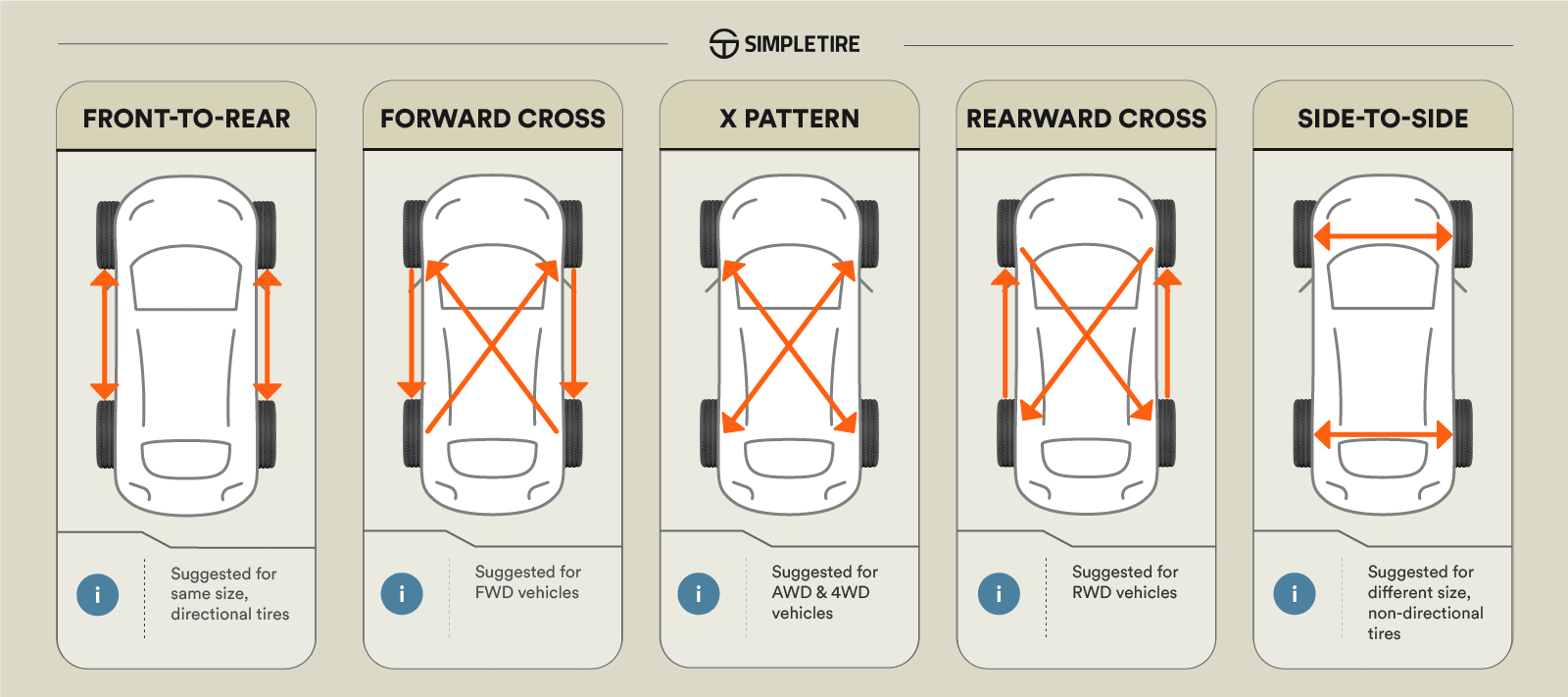
The correct pattern depends on how your vehicle delivers power:
- Front-to-rear: Fronts go to rear, and rears go to front. Recommended for the same size, directional tires
- Forward cross: Fronts go straight back, rears cross to opposite front sides. Best for front-wheel drive (FWD) vehicles
- X-Pattern: All four tires are swapped diagonally (left front to right rear, right front to left rear). Ideal for all-wheel drive (AWD) and four-wheel drive vehicles
- Rearward cross: Rears go straight forward, fronts cross to opposite rear sides. Recommended for rear-wheel drive (RWD) vehicles
- Side-to-side: Left front to right front, left rear to right rear. Best for different-sized, non-directional tires (staggered fitment)
3. When to Rotate Your Tires
While 5,000 to 8,000 miles is the standard answer to when to rotate your tires, certain "Warning Signs" indicate an immediate need for rotation:
- Visible Uneven Wear: One side of the tread is shallower than the other.
- Vibration: Unusual steering wheel or seat vibration at highway speeds.
- Pressure Loss: One tire is losing air faster than the others (often due to heat from uneven friction).
Pro Tip: Take the Penny Test to check tread depth. If you can see the top of Lincoln's head when the penny is inserted into the groove, your tread is below 2/32", and the tire needs replacement.
4. DIY vs. Professional Service
DIY Requirements
If performing a rotation at home, you must:
- Use Jack Stands: Never work under a car supported only by a floor jack.
- Check Torque Specs: Use a torque wrench to tighten lug nuts to the manufacturer’s specific setting.
Professional Benefits
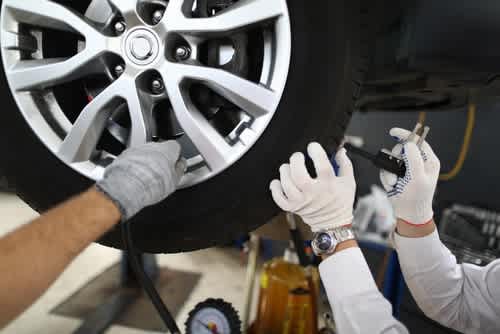
Going to a professional can provide benefits like:
- Computerized Balancing: Corrects weight imbalances that cause vibration.
- Alignment Check: Ensures the suspension is square, preventing future uneven wear.
- Expert Inspection: Identifies sidewall bulges, dry rot, and other issues that non-experts might miss.
Summary and Next Steps
Tire rotation is a high-ROI maintenance task that preserves safety and saves money. By matching your rotation pattern to your vehicle's drivetrain, you ensure your tires perform reliably for their entire rated mileage.
Tires should be rotated at a 5,000-8,000 mile interval.
Tire rotation refers to changing the positions of the tires on the vehicle’s front and rear axles.
Ready to find the perfect tires?
Search By