Tire Maintenance & Safety
Free shipping
Best price guarantee
SimpleCrew exclusive savings
0% financing options
Tire replacement coverage
24/7 roadside assistance
Easy returns
Last updated 1/29/2026 - Originally published 12/02/2022
Written by SimpleTire, Expertly reviewed by Brett Antosh
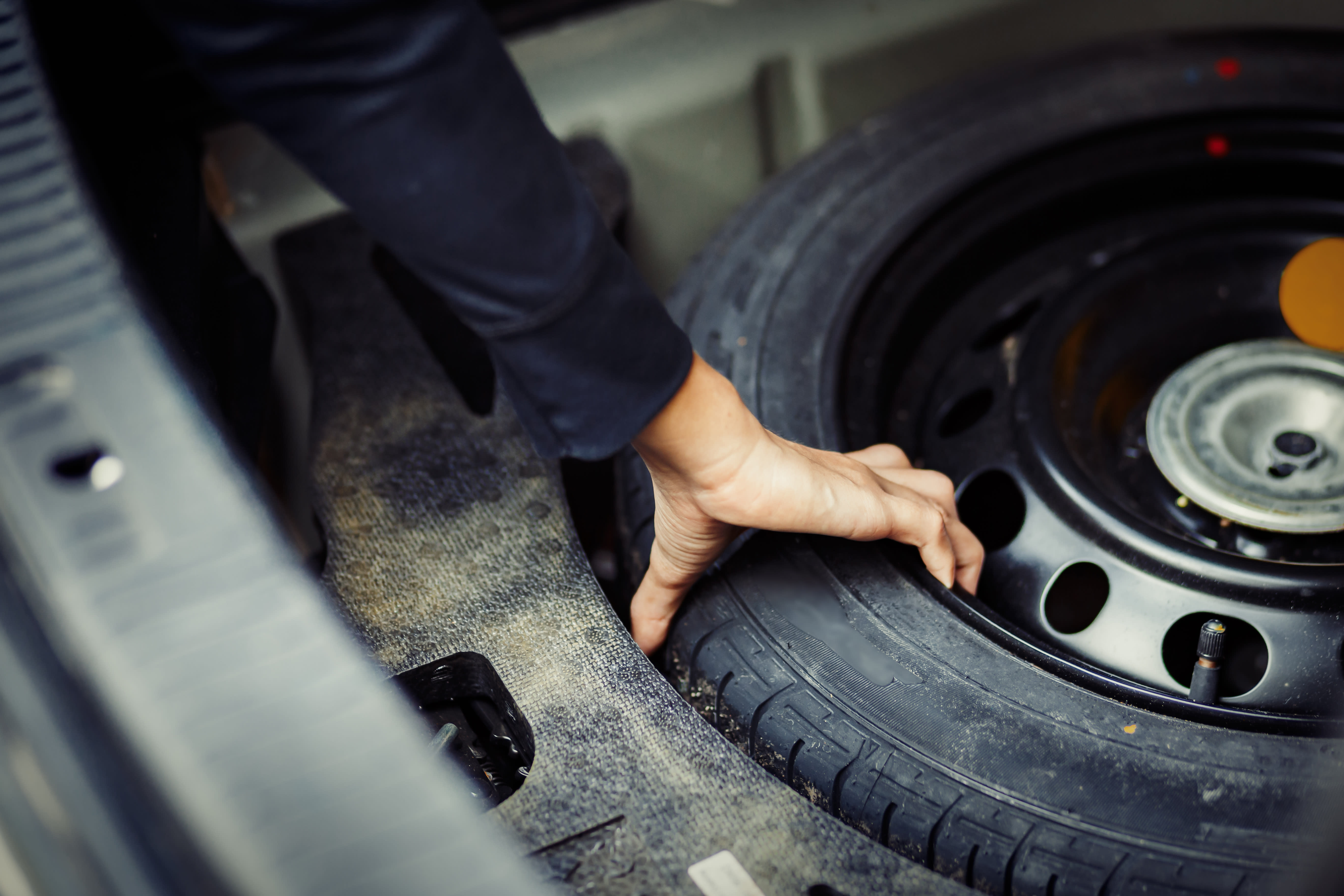
A temporary spare tire, often called a "donut," is an emergency tool. It is made to help move a vehicle to a repair shop. It is not a functional equivalent to a standard tire and possesses significantly lower performance thresholds.
The "50/50 Rule" (Quick Facts)
Driving on a spare tire should follow the 50/50 rule to maintain safety and prevent drivetrain damage. The 50/50 rule is:
- Max Speed: 50 mph
- Max Distance: 50 miles
- Required PSI: Usually 60 psi (check the sidewall; this is much higher than standard tires)
1. Comparison: Temporary Spare vs. Standard Tire
As the name suggests, temporary spare tires are meant for temporary use only. A donut tire has the following limitations:
- Intended Use: Emergency/Short-term
- Max Distance: 50 miles
- Max Speed: 50 MPH (30 MPH in wet or snowy weather)
- Traction/Grip: Minimal, due to a narrow tread pattern
- Weight: Lightweight/compact to fit in or under the trunk of your vehicle
On the flip side, standard tires allow for:
- Intended Use: Daily Driving
- Max Distance: 40,000 to 70,000+ miles
- Max Speed: Varies by speed rating, with over 112 MPH being the max for ultra-high-performance tires
- Traction/Grip: Excellent, thanks to their optimized tread patterns
- Weight: Heavier for durability
2. Are there risks of extended spare tire use?
Driving beyond the recommended 50-mile limit or 50 mph speed cap introduces severe risks:
-
Drivetrain Stress: A donut tire is smaller than regular tires. This makes the vehicle's differential work harder. It has to adjust for the wheels spinning at different speeds. Extended use can lead to expensive transmission or differential failure.
-
Reduced Braking & Handling: The narrow contact patch significantly increases stopping distances and reduces cornering stability.
-
Braking System Issues: The size difference can confuse the Anti-lock Braking System (ABS). It can also confuse the Electronic Stability Control (ESC). This may turn off these safety features or make them work incorrectly.
-
Blowout Hazard: Spares are built with fewer plies (layers) and thinner rubber. They generate heat rapidly and are highly susceptible to failure if driven at highway speeds.
3. Best Practices for Spare Tire Usage
There are four things to consider when using a spare tire:
-
Check Pressure Monthly: Spare tires lose air over time. A flat spare is useless in an emergency. Check your tire pressure monthly. Make sure it is inflated to the high pressure on the sidewall, which is usually 60 psi.
-
Placement (FWD Vehicles): If you have a flat on a front-wheel-drive car, it is safest to move a good rear tire to the front and put the spare on the rear. This keeps your steering and braking wheels at equal traction levels.
-
Disable Features: Avoid using Cruise Control while a spare is installed.
-
Weather Caution: Avoid rain, snow, or ice. The narrow tread of a donut has almost no hydroplaning resistance or winter traction.
4. When should you Replace Your Spare tire?
Spare tires, like standard tires, must be replaced. Here are three ways to know when it's time to replace your spare tire:
- Age: Spare tires should be replaced every 10 years, even if they have never been used, due to rubber degradation (dry rot).
- After One Use: If you have driven the spare for more than 50 miles, its structural integrity is likely compromised.
- Visual Damage: Replace immediately if you see sidewall cracks, "flat spots" from hard braking, or exposed cords.
Remember, a spare tire is a "bridge" to a repair shop, not a permanent solution. For long trips or in rural areas, it is a good idea to upgrade to a full-size spare. This helps keep your vehicle running well in an emergency.
At SimpleTire, we sell 300+ brands of tires for different driving needs. Whether you need a new temporary spare, all-season, or another type of tire, SimpleTire has the tires you need at a great price.
Yes, if it's a full-sized spare tire, you are free to continue driving. However, the average highway speed is higher than 50 MPH, and it is best to avoid driving on a highway with a temporary or donut spare because you should not go faster than 50 MPH.
Yes, there are different types of spare tires. Full-sized spare tires which are exact replicas of your car tires. Then you have space saving tires (donut tires) which can travel 50 miles with the speed 50 MPH.
Ready to find the perfect tires?
Search By