Compare
All-Season vs All-Weather Tires: Which is Right for You?

Free shipping
Best price guarantee
SimpleCrew exclusive savings
0% APR Financing
Tire replacement coverage
24/7 roadside assistance
Easy returns
Compare
Choosing between all-season vs all-weather tires can be confusing because the names sound nearly identical. However, while they share some DNA, there is significant daylight between the two in terms of rubber compounds, tread patterns, and performance limits. Whether you need the long-lasting efficiency of all-season tires or the severe-snow capabilities of all-weather tires, understanding the all-weather vs all-season divide is essential for road safety.
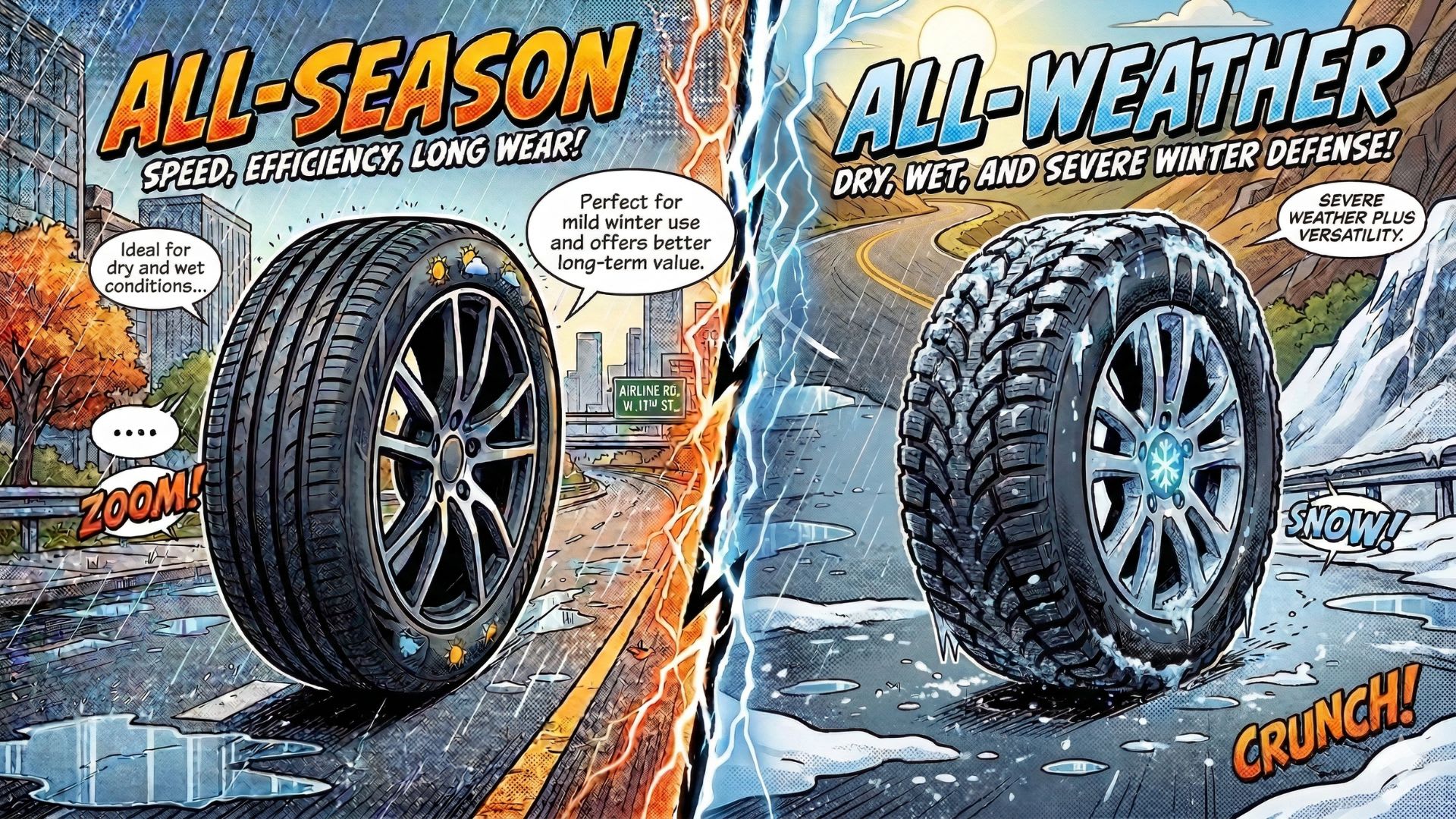
Before the 1970s, drivers had to swap between "highway tires" and clunky "snow tires." Today, the market is dominated by versatile options, but the all-weather vs all-season tires debate hinges on one factor: winter severity.
When comparing all-weather vs all-season efficiency, the specialized design of the tire plays a major role:
Winner: All-season tires.
In wet conditions, the all-season, all-weather tires comparison is often a draw:
Winner: Tossup.
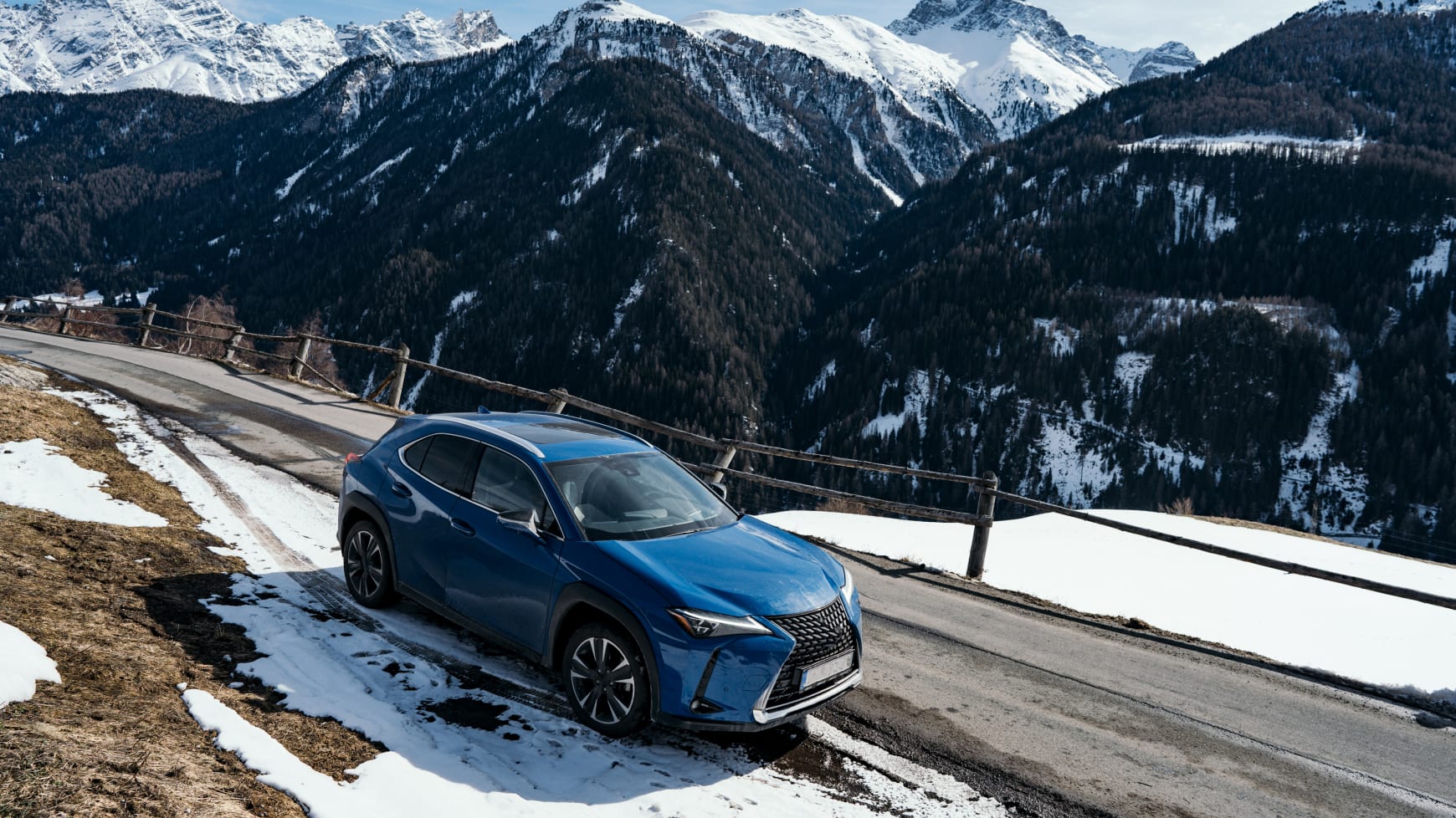
This is where the distinction between all-weather vs all-season becomes crystal clear:
Winner: All-weather tires.
Winner: All-season tires (by a narrow margin).
When deciding between all-season vs all-weather, many drivers face these common frustrations. Here is how to navigate them:

When deciding between all-season vs all-weather, your local climate is the deciding factor.
No matter where you live, finding the right fit is easy. You can browse the full catalog of all-weather and all-season tires at SimpleTire to find the perfect match for your vehicle and budget.
Yes, you can drive on all-weather tires year-round. Unlike dedicated winter tires, which wear down rapidly on dry, hot pavement, all-weather tires are engineered with a rubber compound that remains stable in both summer heat and winter cold. This makes them the perfect "set it and forget it" solution for drivers who want the safety of a winter tire without the hassle of a bi-annual tire swap.
Most experts agree on the "45-degree rule".
All-season tires: Once the temperature drops below 45°F, the rubber begins to harden and lose its "grip" on the road. All-weather tires: These tires stay flexible well below freezing, ensuring you can still brake and turn safely in a cold snap.Search By